
December 27, 2025

December, 27, 2025
December 27, 2025

give

untitled artwork

untitled artwork

World news biblically understood

TRENDING:

One Of The Most Remarkable Prophecies In The Bible Describes In Detail The Crucifixion Of Jesus

Nathan Jones

Did you know that one of the most remarkable prophecies in the Bible describes in detail the crucifixion of Jesus Christ? What also makes this prophecy particularly remarkable is that it was written more than 1,000 years before Jesus was born, and more than 700 years before the Romans perfected crucifixion as a method of execution! You can find this prophecy in Psalm 22—a psalm written by King David and recited by Jesus as He hung on the cross.

Suffering #1 – Spiritual Suffering (Psalm 22:1-5)

Psalm 22 begins with an agonizing cry of despair: “My God, my God, why hast thou forsaken me? why art thou so far from helping me, and from the words of my roaring? O my God, I cry in the daytime, but thou hearest not; and in the night season, and am not silent.” (vv. 1-2)

David bemoans the fact that although he has been seeking the Lord’s help both day and night, all he has received so far in response is silence. This type of statement is not evidence of a loss of faith, rather it is more an expression of impatience and desperation.

Likewise, as Jesus hung on the cross and darkness descended upon all the land, the Suffering Servant cried out with a loud voice, “Eli, Eli, lama sabachthani?” which translated means, “My God, My God, why have You forsaken Me?” (Matthew 27:45-46). For the first time in Christ’s eternal existence, as He became a living offering for mankind’s sins (2 Corinthians 5:21), the Son found Himself cut off from the Trinity. Because the holiness of God cannot countenance sin, God the Father had to, in effect, turn His back on His Son. Much like enduring an amputation without anesthesia, Jesus cried out from the depths of His soul. “But thou art holy, O thou that inhabitest the praises of Israel. Our fathers trusted in thee: they trusted, and thou didst deliver them. They cried unto thee, and were delivered: they trusted in thee, and were not confounded.” (vv. 3-5)

Suffering #2 – Emotional Suffering (Psalm 22:6-13)

Not only did Jesus suffer terribly spiritually, but He was under tremendous emotional distress as well: “But I am a worm, and no man; a reproach of men, and despised of the people. All they that see me laugh me to scorn: they shoot out the lip, they shake the head, saying, He trusted on the LORD that he would deliver him: let him deliver him, seeing he delighted in him.” (vv. 6-8)

The Hebrew word translated as “worm” in verse 6 is tola, also the word for crimson. In this context, it’s most likely referring to the bloody red condition of the Messiah after His flogging. Jesus would have been so mutilated and swollen that He would scarcely resemble a man.

While this passage describes the intense physical suffering of the Messiah, it is also combined with the emotional suffering Jesus was experiencing as onlookers sneered and taunted Him. Those who passed by blasphemed Him, shook their heads at Him, and mocked Him saying, “He saved others, but He cannot save Himself” (Matthew 27:42).

Even as Jesus endured the taunts from the very people He was suffering for, the psalmist has the Messiah yet again affirm His faith: “But thou art he that took me out of the womb: thou didst make me hope when I was upon my mother’s breasts. I was cast upon thee from the womb: thou art my God from my mother’s belly.” (vv. 9-10)

This reaffirmation of faith is an incredible act of will. Even as Jesus was suffering in solitude with “none to help” (v. 11), having been abandoned by all His disciples the night before, the Messiah remained faithful throughout His sufferings.

The psalmist next resorts to symbolic language when describing the spiritual attack the Messiah would experience during His passion: “Many bulls have compassed me: strong bulls of Bashan have beset me round. They gaped upon me with their mouths, as a ravening and a roaring lion.” (vv. 12-13)

What human eyes failed to see were the demonic hordes surrounding the cross, gloating over the Messiah’s approaching death. As the apostle Peter revealed, Satan is like “a roaring lion seeking someone to devour” (1 Peter 5:8). Jesus with His spiritual eyes undoubtedly saw the demonic realm dancing around the cross and gloating over their “victory” in orchestrating the murder of God’s Son.

So, not only was the realm of man mocking Christ in His sufferings, but the spiritual realm as well.

Suffering #3 – Physical Suffering (Psalm 22:14-21)

Jesus was being crucified—one of the most horrible deaths ever devised by the depraved mind of man—so clearly, Jesus suffered intense physical pain as well. The psalmist describes the Messiah’s physical suffering in all its gory detail: “I am poured out like water, and all my bones are out of joint: my heart is like wax; it is melted in the midst of my bowels. My strength is dried up like a potsherd; and my tongue cleaveth to my jaws; and thou hast brought me into the dust of death.” (vv. 14-15)

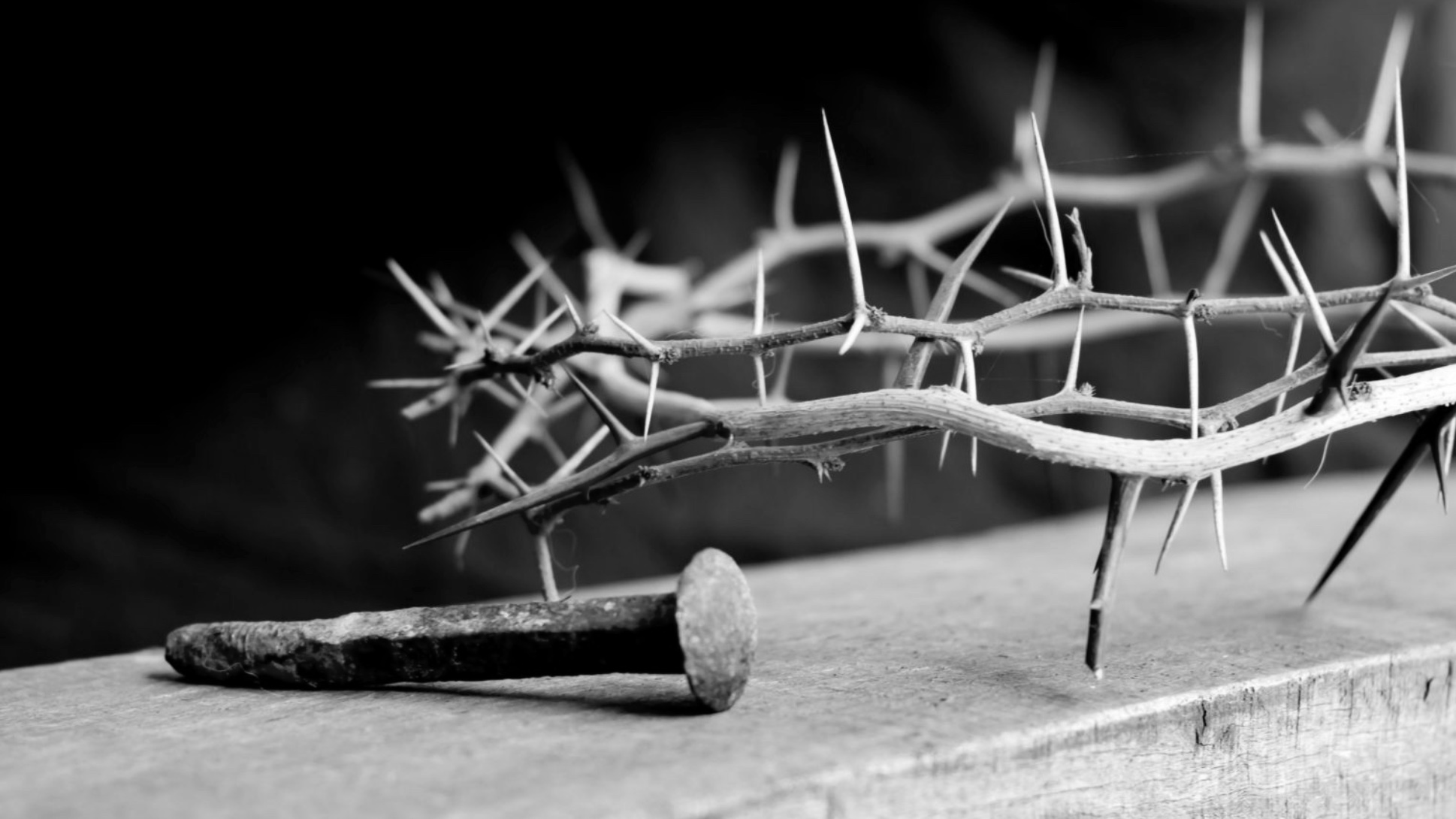
Before being crucified, Pilate had Jesus scourged. Roman soldiers then twisted a crown of thorns and crushed it upon Jesus’ brow as they beat His head with a reed and spit on Him. John’s gospel adds how Jesus suffered extreme thirst as He hung on the cross, even crying out, “I am thirsty,” only to receive a sponge full of sour wine. Christ’s bones had been pushed out of joint. He was suffering from extreme thirst. His heart was stressed to the point of bursting. Death hovered over Him.

We next encounter one of the most remarkable prophecies in the Hebrew Scriptures: “For dogs have compassed me: the assembly of the wicked have inclosed me: they pierced my hands and my feet.” (v. 16)

Keep in mind, as stated, these words were written 1,000 years before Christ’s birth. The Romans had refined crucifixion as a method of execution only 300 years earlier. And yet, by inspiration of the Holy Spirit, David prophesied that the Messiah would die by having His hands and feet pierced. The Jewish method of execution was by stoning, but capital punishment under Roman rule was by crucifixion. The Gospel of Mark confirms that the soldiers marched Jesus to Golgotha—the “Place of a Skull”—where they did not stone but crucified Him.

The psalmist concludes his observations about the physical suffering of the Messiah: “I may tell all my bones: they look and stare upon me. They part my garments among them, and cast lots upon my vesture.” (vv. 17-18)

Crucifixion causes its victims to gasp for air when hanging heavy on the executioner’s stake. All the Messiah’s ribs had been laid bare. And, as Christ’s lifeblood ebbed away, one more act of cruelty played out by His feet—the soldiers gambled for His clothes (Matthew 27:35).

As the demons danced in glee before Christ in His sufferings and the soldiers gambled for the only thing Jesus owned, the psalmist records a final prayer uttered by the Messiah—a plea for deliverance from Satan: “They part my garments among them, and cast lots upon my vesture. But be not thou far from me, O LORD: O my strength, haste thee to help me. Deliver my soul from the sword; my darling from the power of the dog. Save me from the lion’s mouth: for thou hast heard me from the horns of the unicorns.” (vv. 19-21)

While none of the Gospels record Jesus uttering such a prayer on the cross, He undoubtedly must have done so, perhaps silently or in a whisper. He ends the prayer by asking for deliverance from Satan (the lion) and his demonic hordes (the wild oxen).

Victory #1 – Salvation (Psalm 22:22-26)

The last six verses in Psalm 22 present the glorious victories achieved due to the Messiah’s sufferings. For, nestled in between verses 21 and 22, the greatest miracle in history occurs—the resurrection of the Messiah! The miracle is not specifically stated, but it is certainly inferred. We know this because verse 22 begins with a song of celebration thanking God for His deliverance: “I will declare thy name unto my brethren: in the midst of the congregation will I praise thee. Ye that fear the LORD, praise him; all ye the seed of Jacob, glorify him; and fear him, all ye the seed of Israel. For he hath not despised nor abhorred the affliction of the afflicted; neither hath he hid his face from him; but when he cried unto him, he heard. My praise shall be of thee in the great congregation: I will pay my vows before them that fear him.” (vv. 22-25)

In the days leading up to the Passion, Jesus had repeatedly told His disciples that He would be killed and then resurrected. Not only did God prophesy through David the Messiah’s crucifixion, but His resurrection as well. Jesus would fulfill both prophecies.

The first victory Christ achieved through His sacrificial death and resurrection is the most important—salvation to all who put their faith and trust in Jesus as Savior. “The meek shall eat and be satisfied: they shall praise the LORD that seek him: your heart shall live for ever.” (v. 26)

Peter explained the meaning of this verse. “Who Himself bore our sins in His body on the tree, so that having died to sin, we might live to righteousness; by His wounds you were healed” (1 Peter 2:24).

Victory #2 – Exaltation (Psalm 22:27-29)

The second victory Jesus achieved through His sacrificial death and resurrection centers on the obedience of the Messiah. Christ’s submission to the humiliation of the cross would transform into His exaltation before all nations upon His return to reign over the earth.

All the ends of the world shall remember and turn unto the LORD: and all the kindreds of the nations shall worship before thee. For the kingdom is the LORD’S: and he is the governor among the nations.” (vv. 27-28)

Once the Lord’s glorious reign commences, all who are saved will worship before their King, and so prosper. In contrast, those who are condemned due to their unbelief will also bow before Jesus and confess Him as King before being consigned to Hell.

All they that be fat upon earth shall eat and worship: all they that go down to the dust shall bow before him: and none can keep alive his own soul.” (v. 29)

The prophet Isaiah foretold, and Romans 14 and Philippians 2 affirm, that every knee will indeed bow, and every tongue will confess, that Jesus, He is Lord.

Victory #3 – Proclamation (Psalm 22:30-31)

The third victory due to the sacrificial death and resurrection of the Messiah that Psalm 22 reveals involves the proclamation of Christ’s legacy. During the millennial reign of Jesus, the resurrected redeemed in their glorified bodies will teach those who will be born during that time about the righteousness and all-sufficiency of Christ’s sacrifice on the cross.

“A seed shall serve him; it shall be accounted to the Lord for a generation. They shall come, and shall declare his righteousness unto a people that shall be born, that he hath done this.” (vv. 30-31)

Notice in particular the concluding phrase, “He has done it.” Literally, in Hebrew, this means, “It is finished.” The Gospel of John describes how just before Jesus bowed His head and gave up His spirit, He cried out, “It is finished!” Jesus had completed His recitation of Psalm 22; His sacrifice was now complete.

One thing is certain, the fulfillment of the prophecies found in Psalm 22 concerning the sufferings and victories of Jesus Christ on the cross confirms that He is indeed the promised Messiah. Only by the shed blood of the Suffering Servant can mankind find salvation from the just penalty of Hell brought on by our rebellion against God (Ephesians 1:7; 1 John 1:7). Only in the name of Jesus Christ can each of us be saved and receive eternal life (John 14:6; Acts 4:12).

give

untitled artwork

In Landmark Class-Action Ruling, Federal Court Deals Decisive Blow To California’s Twisted Gender Agenda

In his ruling, Benitez made clear that the state had overstepped its constitutional authority by sidelining parents, compelling educators to violate their consciences, and harming vulnerable children by depriving them of parental guidance. At the heart of the case was the question of who holds primary authority over a child’s welfare. The court answered decisively: parents do.

A Serious Freedom Of Speech Problem: The Three Big Threats To UK Street Ministry

Christian street ministry has a long and fruitful history in the United Kingdom. But in recent years the freedom to preach in the streets has been severely curtailed. The legalisation of same-sex marriage and the advancement of transgenderism has left Christians vulnerable should they speak about the Bible’s pattern for marriage and sexuality. This is true for people in the workplace, who may risk their jobs for speaking up. But it’s also true in public spaces.

sign up

In A Grief Stricken Australia, A Question Swirls: Why Were All The Warnings Ignored?

By now, I am sure you are all aware of the terrorist act perpetrated against Sydney’s Jewish community on the first night of Hanukkah in the iconic Sydney suburb of Bondi Beach. The warnings issued by Australia’s Jewish community since October 7 had largely been ignored by our ruling class. Now, we see the heartbreaking result of ignoring those warnings. Jewish men, women and children are dead, Jewish shops intend to close permanently for security reasons, and an entire community is in mourning. 

ABC's of Salvation

Decision

UTT

untitled artwork

Israel My Glory

Nathan Jones

Did you know that one of the most remarkable prophecies in the Bible describes in detail the crucifixion of Jesus Christ? What also makes this prophecy particularly remarkable is that it was written more than 1,000 years before Jesus was born, and more than 700 years before the Romans perfected crucifixion as a method of execution! You can find this prophecy in Psalm 22—a psalm written by King David and recited by Jesus as He hung on the cross.

Suffering #1 – Spiritual Suffering (Psalm 22:1-5)

Psalm 22 begins with an agonizing cry of despair: “My God, my God, why hast thou forsaken me? why art thou so far from helping me, and from the words of my roaring? O my God, I cry in the daytime, but thou hearest not; and in the night season, and am not silent.” (vv. 1-2)

David bemoans the fact that although he has been seeking the Lord’s help both day and night, all he has received so far in response is silence. This type of statement is not evidence of a loss of faith, rather it is more an expression of impatience and desperation.

Likewise, as Jesus hung on the cross and darkness descended upon all the land, the Suffering Servant cried out with a loud voice, “Eli, Eli, lama sabachthani?” which translated means, “My God, My God, why have You forsaken Me?” (Matthew 27:45-46). For the first time in Christ’s eternal existence, as He became a living offering for mankind’s sins (2 Corinthians 5:21), the Son found Himself cut off from the Trinity. Because the holiness of God cannot countenance sin, God the Father had to, in effect, turn His back on His Son. Much like enduring an amputation without anesthesia, Jesus cried out from the depths of His soul. “But thou art holy, O thou that inhabitest the praises of Israel. Our fathers trusted in thee: they trusted, and thou didst deliver them. They cried unto thee, and were delivered: they trusted in thee, and were not confounded.” (vv. 3-5)

Suffering #2 – Emotional Suffering (Psalm 22:6-13)

Not only did Jesus suffer terribly spiritually, but He was under tremendous emotional distress as well: “But I am a worm, and no man; a reproach of men, and despised of the people. All they that see me laugh me to scorn: they shoot out the lip, they shake the head, saying, He trusted on the LORD that he would deliver him: let him deliver him, seeing he delighted in him.” (vv. 6-8)

The Hebrew word translated as “worm” in verse 6 is tola, also the word for crimson. In this context, it’s most likely referring to the bloody red condition of the Messiah after His flogging. Jesus would have been so mutilated and swollen that He would scarcely resemble a man.

While this passage describes the intense physical suffering of the Messiah, it is also combined with the emotional suffering Jesus was experiencing as onlookers sneered and taunted Him. Those who passed by blasphemed Him, shook their heads at Him, and mocked Him saying, “He saved others, but He cannot save Himself” (Matthew 27:42).

Even as Jesus endured the taunts from the very people He was suffering for, the psalmist has the Messiah yet again affirm His faith: “But thou art he that took me out of the womb: thou didst make me hope when I was upon my mother’s breasts. I was cast upon thee from the womb: thou art my God from my mother’s belly.” (vv. 9-10)

This reaffirmation of faith is an incredible act of will. Even as Jesus was suffering in solitude with “none to help” (v. 11), having been abandoned by all His disciples the night before, the Messiah remained faithful throughout His sufferings.

The psalmist next resorts to symbolic language when describing the spiritual attack the Messiah would experience during His passion: “Many bulls have compassed me: strong bulls of Bashan have beset me round. They gaped upon me with their mouths, as a ravening and a roaring lion.” (vv. 12-13)

What human eyes failed to see were the demonic hordes surrounding the cross, gloating over the Messiah’s approaching death. As the apostle Peter revealed, Satan is like “a roaring lion seeking someone to devour” (1 Peter 5:8). Jesus with His spiritual eyes undoubtedly saw the demonic realm dancing around the cross and gloating over their “victory” in orchestrating the murder of God’s Son.

So, not only was the realm of man mocking Christ in His sufferings, but the spiritual realm as well.

Suffering #3 – Physical Suffering (Psalm 22:14-21)

Jesus was being crucified—one of the most horrible deaths ever devised by the depraved mind of man—so clearly, Jesus suffered intense physical pain as well. The psalmist describes the Messiah’s physical suffering in all its gory detail: “I am poured out like water, and all my bones are out of joint: my heart is like wax; it is melted in the midst of my bowels. My strength is dried up like a potsherd; and my tongue cleaveth to my jaws; and thou hast brought me into the dust of death.” (vv. 14-15)

Before being crucified, Pilate had Jesus scourged. Roman soldiers then twisted a crown of thorns and crushed it upon Jesus’ brow as they beat His head with a reed and spit on Him. John’s gospel adds how Jesus suffered extreme thirst as He hung on the cross, even crying out, “I am thirsty,” only to receive a sponge full of sour wine. Christ’s bones had been pushed out of joint. He was suffering from extreme thirst. His heart was stressed to the point of bursting. Death hovered over Him.

We next encounter one of the most remarkable prophecies in the Hebrew Scriptures: “For dogs have compassed me: the assembly of the wicked have inclosed me: they pierced my hands and my feet.” (v. 16)

Keep in mind, as stated, these words were written 1,000 years before Christ’s birth. The Romans had refined crucifixion as a method of execution only 300 years earlier. And yet, by inspiration of the Holy Spirit, David prophesied that the Messiah would die by having His hands and feet pierced. The Jewish method of execution was by stoning, but capital punishment under Roman rule was by crucifixion. The Gospel of Mark confirms that the soldiers marched Jesus to Golgotha—the “Place of a Skull”—where they did not stone but crucified Him.

The psalmist concludes his observations about the physical suffering of the Messiah: “I may tell all my bones: they look and stare upon me. They part my garments among them, and cast lots upon my vesture.” (vv. 17-18)

Crucifixion causes its victims to gasp for air when hanging heavy on the executioner’s stake. All the Messiah’s ribs had been laid bare. And, as Christ’s lifeblood ebbed away, one more act of cruelty played out by His feet—the soldiers gambled for His clothes (Matthew 27:35).

As the demons danced in glee before Christ in His sufferings and the soldiers gambled for the only thing Jesus owned, the psalmist records a final prayer uttered by the Messiah—a plea for deliverance from Satan: “They part my garments among them, and cast lots upon my vesture. But be not thou far from me, O LORD: O my strength, haste thee to help me. Deliver my soul from the sword; my darling from the power of the dog. Save me from the lion’s mouth: for thou hast heard me from the horns of the unicorns.” (vv. 19-21)

While none of the Gospels record Jesus uttering such a prayer on the cross, He undoubtedly must have done so, perhaps silently or in a whisper. He ends the prayer by asking for deliverance from Satan (the lion) and his demonic hordes (the wild oxen).

Victory #1 – Salvation (Psalm 22:22-26)

The last six verses in Psalm 22 present the glorious victories achieved due to the Messiah’s sufferings. For, nestled in between verses 21 and 22, the greatest miracle in history occurs—the resurrection of the Messiah! The miracle is not specifically stated, but it is certainly inferred. We know this because verse 22 begins with a song of celebration thanking God for His deliverance: “I will declare thy name unto my brethren: in the midst of the congregation will I praise thee. Ye that fear the LORD, praise him; all ye the seed of Jacob, glorify him; and fear him, all ye the seed of Israel. For he hath not despised nor abhorred the affliction of the afflicted; neither hath he hid his face from him; but when he cried unto him, he heard. My praise shall be of thee in the great congregation: I will pay my vows before them that fear him.” (vv. 22-25)

In the days leading up to the Passion, Jesus had repeatedly told His disciples that He would be killed and then resurrected. Not only did God prophesy through David the Messiah’s crucifixion, but His resurrection as well. Jesus would fulfill both prophecies.

The first victory Christ achieved through His sacrificial death and resurrection is the most important—salvation to all who put their faith and trust in Jesus as Savior. “The meek shall eat and be satisfied: they shall praise the LORD that seek him: your heart shall live for ever.” (v. 26)

Peter explained the meaning of this verse. “Who Himself bore our sins in His body on the tree, so that having died to sin, we might live to righteousness; by His wounds you were healed” (1 Peter 2:24).

Victory #2 – Exaltation (Psalm 22:27-29)

The second victory Jesus achieved through His sacrificial death and resurrection centers on the obedience of the Messiah. Christ’s submission to the humiliation of the cross would transform into His exaltation before all nations upon His return to reign over the earth.

All the ends of the world shall remember and turn unto the LORD: and all the kindreds of the nations shall worship before thee. For the kingdom is the LORD’S: and he is the governor among the nations.” (vv. 27-28)

Once the Lord’s glorious reign commences, all who are saved will worship before their King, and so prosper. In contrast, those who are condemned due to their unbelief will also bow before Jesus and confess Him as King before being consigned to Hell.

All they that be fat upon earth shall eat and worship: all they that go down to the dust shall bow before him: and none can keep alive his own soul.” (v. 29)

The prophet Isaiah foretold, and Romans 14 and Philippians 2 affirm, that every knee will indeed bow, and every tongue will confess, that Jesus, He is Lord.

Victory #3 – Proclamation (Psalm 22:30-31)

The third victory due to the sacrificial death and resurrection of the Messiah that Psalm 22 reveals involves the proclamation of Christ’s legacy. During the millennial reign of Jesus, the resurrected redeemed in their glorified bodies will teach those who will be born during that time about the righteousness and all-sufficiency of Christ’s sacrifice on the cross.

“A seed shall serve him; it shall be accounted to the Lord for a generation. They shall come, and shall declare his righteousness unto a people that shall be born, that he hath done this.” (vv. 30-31)

Notice in particular the concluding phrase, “He has done it.” Literally, in Hebrew, this means, “It is finished.” The Gospel of John describes how just before Jesus bowed His head and gave up His spirit, He cried out, “It is finished!” Jesus had completed His recitation of Psalm 22; His sacrifice was now complete.

One thing is certain, the fulfillment of the prophecies found in Psalm 22 concerning the sufferings and victories of Jesus Christ on the cross confirms that He is indeed the promised Messiah. Only by the shed blood of the Suffering Servant can mankind find salvation from the just penalty of Hell brought on by our rebellion against God (Ephesians 1:7; 1 John 1:7). Only in the name of Jesus Christ can each of us be saved and receive eternal life (John 14:6; Acts 4:12).
Trusted Analysis From A Biblical Worldview

Help reach the lost and equip the church with the living and active truth of God's Word in our world today.

YOU CARE ABOUT

BIBLICAL TRUTH. SO DO WE.


Together, We Can Deliver A Biblical Understanding

Of News Events Around The World.

In Landmark Class-Action Ruling, Federal Court Deals Decisive Blow To California’s Twisted Gender Agenda

In his ruling, Benitez made clear that the state had overstepped its constitutional authority by sidelining parents, compelling educators to violate their consciences, and harming vulnerable children by depriving them of parental guidance. At the heart of the case was the question of who holds primary authority over a child’s welfare. The court answered decisively: parents do.

A Serious Freedom Of Speech Problem: The Three Big Threats To UK Street Ministry

Christian street ministry has a long and fruitful history in the United Kingdom. But in recent years the freedom to preach in the streets has been severely curtailed. The legalisation of same-sex marriage and the advancement of transgenderism has left Christians vulnerable should they speak about the Bible’s pattern for marriage and sexuality. This is true for people in the workplace, who may risk their jobs for speaking up. But it’s also true in public spaces.

untitled artwork 6391

In A Grief Stricken Australia, A Question Swirls: Why Were All The Warnings Ignored?

By now, I am sure you are all aware of the terrorist act perpetrated against Sydney’s Jewish community on the first night of Hanukkah in the iconic Sydney suburb of Bondi Beach. The warnings issued by Australia’s Jewish community since October 7 had largely been ignored by our ruling class. Now, we see the heartbreaking result of ignoring those warnings. Jewish men, women and children are dead, Jewish shops intend to close permanently for security reasons, and an entire community is in mourning. 

ABC's of Salvation

TV AD

worldview matters

Decision Magazine V AD

Decision

Jan Markell

Israel My Glory

Erick Stakelbeck

untitled artwork

YOU CARE ABOUT

BIBLICAL TRUTH.

SO DO WE.

Together, We Can Deliver A Biblical Understanding Of News Events Around The World And Equip The Church To Stand With A Biblical Worldview.

Israel My Glory

untitled artwork

YOU CARE ABOUT

BIBLICAL TRUTH.

SO DO WE.


Together, We Can Deliver A Biblical Understanding Of News Events Around The World And Equip The Church To Stand With A Biblical Worldview.