January 7, 2026

January, 7, 2026
January 7, 2026

give

untitled artwork

untitled artwork

World news biblically understood

TRENDING:

Hezbollah-dominated government emerges in Lebanon for the first time since 1990

For the first time since the departure of Syrian troops from Lebanon in 1990, the latter country has a government in which only Hezbollah and its allies are represented. This is likely to have a significant negative effect on Beirut’s efforts to engage international partners and donors in order to alleviate the acute financial crisis facing the country. It will also impact on Israeli strategic planning vis-à-vis Hezbollah.

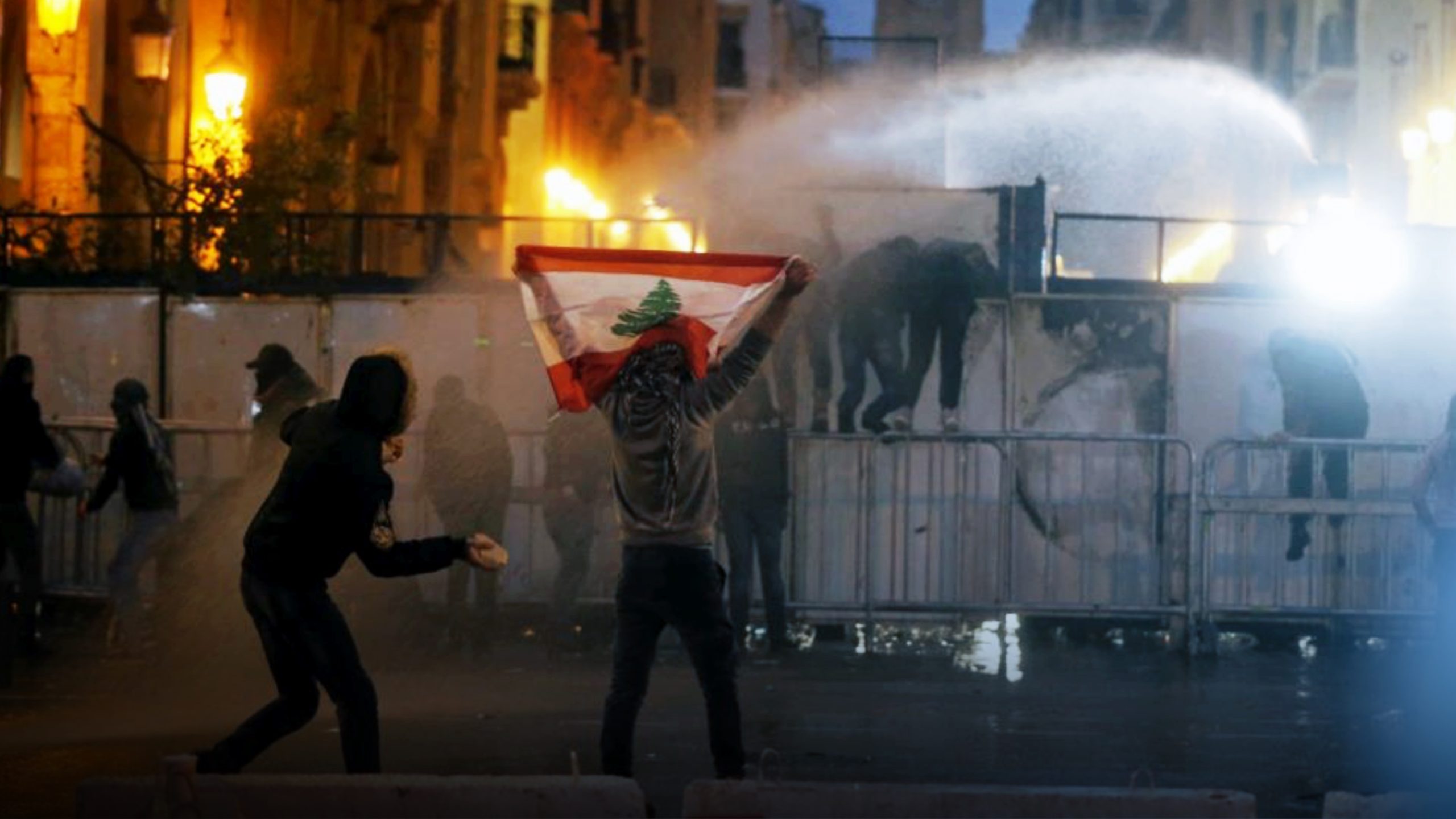
The new government is the product of escalating popular protests under way since October 15. The protests are in response to Lebanon’s dire economic state. Demonstrators were demanding the formation of a government of “technocrats” qualified to address the urgent issues facing the country and untainted by contact with Lebanon’s enormously corrupt political parties.

The new government appears to be an attempt to create the superficial appearance of such an administration. Its 20 ministers were presented by Prime Minister Hassan Diab as “specialists,” nonpartisan and without loyalties to this or that political bloc.

Few Lebanese are likely to be convinced by this claim. The “specialists” in question are individuals whose names were put forward by the political parties. The composition of the new government emerged in a process of wrangling and horse trading between these parties.

But, crucially, parties and movements broadly associated with the West and with Saudi Arabia stayed out of the negotiations. Individuals linked to prominent pro-Western and anti-Iranian political trends, such as the former prime minister’s Mustaqbal (Future) Movement and the Christian Lebanese Forces, are not to be found among the new ministers. The Progressive Socialist Party of Lebanese Druze leader Walid Jumblatt is also not represented.

The government that has emerged from this process comprises individuals linked to movements that are part of only one of the existing power structures – the one associated with Hezbollah and Iran.

The new administration is being described by Lebanese commentators as a government of “one color,” Lebanon’s first of this kind. The color is that of Hezbollah and Iran’s banners.

Hezbollah itself controls only two ministries in the new government. But the Christian Free Patriotic Movement, led by Gebran Bassil, and the Shia Amal movement, both closely associated with Hezbollah, control much of the rest. Smaller parties also associated with this bloc make up the remainder.

In this regard, Diab’s emergent government constitutes for the first time an administration that reflects the long-standing power reality in Lebanon. Hezbollah has long dominated the key nodes of power in Lebanon – in the military and intelligence fields. Its influence is also profound in the economic sector. The overt, formal political administration in the country will now reflect this.

Over the last decade and a half, Hezbollah has gradually removed all obstacles to its exercise of full-spectrum dominance in Lebanon. In a trial of strength in May-June 2008, it brushed aside an attempt by West-aligned forces to challenge its will by force. Hezbollah’s 50,000-strong armed forces obey the edict of no government in Beirut.

On October 31, 2016, long-standing Hezbollah ally Gen. Michel Aoun assumed the presidency of Lebanon.

Three of Lebanon’s four intelligence services – the General Directorate of General Security, the Military Intelligence Directorate and the State Security Directorate – are headed by individuals appointed by Aoun and approved by Hezbollah. The fourth, the Internal Security Forces, once constituted a potent Sunni-led intelligence organization, associated with anti-Syrian and anti-Hezbollah forces. Today, headed by Imad Othman, it no longer plays this role.

Following the elections of May 2018, Hezbollah and its allies dominated the legislature and executive. They controlled 74 seats in the 128-member parliament, and 19 of 30 cabinet portfolios. But until the resignation of prime minister Saad Hariri in October 2019, the facade of a coalition government continued. This situation was amenable to the Hezbollah-controlled deep state. It enabled normal relations with international institutions, including financial ones, and ensured the continued flow of US and European aid.

As of this week, however, the ambiguity appears to have cleared. Formal power in Lebanon now coincides with real power.

SINCE THE war of 2006, a body of opinion has emerged in Israel according to which, in the event of a future conflict ignited by Hezbollah, Israel should abandon the paradigm by which the Lebanese state is seen as a helpless but blameless hostage of the Shia terrorist group.

Representing this view, then-education minister and current Defense Minister Naftali Bennett said in May 2018, following significant electoral gains by Hezbollah and its allies, that henceforth “the State of Israel will not differentiate between the sovereign state of Lebanon and Hezbollah, and will view Lebanon as responsible for any action from within its territory.”

In 2006, the government of prime minister Fouad Siniora was orientated toward the West. Israel thus faced the difficult task of chasing Hezbollah in Lebanon, while avoiding harm to the Lebanese state infrastructure. The results were mixed. It has since become apparent that senior Iranian Revolutionary Guard Corps (IRGC) commanders, including the late Gen. Qasem Soleimani, were present in Lebanon during that war, directing the campaign of their Lebanese franchise.

Given the events of this week in Lebanon, any such attempt at differentiation is unlikely to be repeated. Rather, in a future contest between Israel and Hezbollah/Iran, the state of Lebanon under its Hezbollah-dominated government will constitute the enemy. This, in turn, will enable Israel to exercise the full range of options available to it from a conventional military point of view.

It is not clear whether such a war would include a formal declaration of war between Israel and Lebanon. If it did, such a declaration would be highly misleading. A conflict of this kind would not in any meaningful sense constitute a war between two sovereign states. Rather, as recent events in Iraq, Syria and Lebanon have made clear, the praxis of the IRGC is to use its franchises to construct states within states. These structures then seek to occupy the formal body of the state, turning its independence and sovereignty into a fiction. This process appears this week in Lebanon to have reached its apogee. The formal state, up to and including the highest bodies of government, is now operated solely and overtly by Iran via its franchise, with the allies and clients of that franchise. This produces clarity, with its many attendant benefits.

CLICK HERE FOR
SOURCE

give

untitled artwork

Will The World Finally Face The Truth About What’s Happening To Believers In Nigeria?

Joel Veldkamp, head of international communications for Christian Solidarity International, said politics often taints the CPC list. Nigeria was on the list during Trump’s first term, but the Biden administration removed it. “It’s one of the most egregious omissions,” Veldkamp told CBN News. “More Christians are killed in Nigeria for their faith every year than in the rest of the world combined.”

Only The Tip Of The Iceberg: Somalia’s UN Ambassador Linked to Fraud Scandal Enveloping Minnesota

As to the full breadth of the scandal, “we’ve only seen the tip of the iceberg so far,” Adams emphasized. “But Americans can have confidence that we’re going to uncover the size and magnitude of this, and we’re going to do everything we can to return those dollars back to hard working Americans.”

sign up

Prime Minister Anthony Albanese Has Been Failing Australia’s Jewish Community For 25 Years

The Australian Jewish News reported that Mr Albanese had also been at a Canberra rally in 2000, referring to him as a “pro-Palestinian Labor MP.” Sadly, as it is now, so it was then. Synagogues were vandalised in both Sydney and Canberra (the locations of the two rallies), and Jewish families were advised to avoid public displays of faith.   Where did Australia go wrong? In part, 25 years ago. Anthony Albanese failed Australia’s Jewish community in 2000, and he failed them again in 2025. By God’s mercy, may this be the last of his failures.

ABC's of Salvation

Decision

UTT

untitled artwork

Israel My Glory

For the first time since the departure of Syrian troops from Lebanon in 1990, the latter country has a government in which only Hezbollah and its allies are represented. This is likely to have a significant negative effect on Beirut’s efforts to engage international partners and donors in order to alleviate the acute financial crisis facing the country. It will also impact on Israeli strategic planning vis-à-vis Hezbollah.

The new government is the product of escalating popular protests under way since October 15. The protests are in response to Lebanon’s dire economic state. Demonstrators were demanding the formation of a government of “technocrats” qualified to address the urgent issues facing the country and untainted by contact with Lebanon’s enormously corrupt political parties.

The new government appears to be an attempt to create the superficial appearance of such an administration. Its 20 ministers were presented by Prime Minister Hassan Diab as “specialists,” nonpartisan and without loyalties to this or that political bloc.

Few Lebanese are likely to be convinced by this claim. The “specialists” in question are individuals whose names were put forward by the political parties. The composition of the new government emerged in a process of wrangling and horse trading between these parties.

But, crucially, parties and movements broadly associated with the West and with Saudi Arabia stayed out of the negotiations. Individuals linked to prominent pro-Western and anti-Iranian political trends, such as the former prime minister’s Mustaqbal (Future) Movement and the Christian Lebanese Forces, are not to be found among the new ministers. The Progressive Socialist Party of Lebanese Druze leader Walid Jumblatt is also not represented.

The government that has emerged from this process comprises individuals linked to movements that are part of only one of the existing power structures – the one associated with Hezbollah and Iran.

The new administration is being described by Lebanese commentators as a government of “one color,” Lebanon’s first of this kind. The color is that of Hezbollah and Iran’s banners.

Hezbollah itself controls only two ministries in the new government. But the Christian Free Patriotic Movement, led by Gebran Bassil, and the Shia Amal movement, both closely associated with Hezbollah, control much of the rest. Smaller parties also associated with this bloc make up the remainder.

In this regard, Diab’s emergent government constitutes for the first time an administration that reflects the long-standing power reality in Lebanon. Hezbollah has long dominated the key nodes of power in Lebanon – in the military and intelligence fields. Its influence is also profound in the economic sector. The overt, formal political administration in the country will now reflect this.

Over the last decade and a half, Hezbollah has gradually removed all obstacles to its exercise of full-spectrum dominance in Lebanon. In a trial of strength in May-June 2008, it brushed aside an attempt by West-aligned forces to challenge its will by force. Hezbollah’s 50,000-strong armed forces obey the edict of no government in Beirut.

On October 31, 2016, long-standing Hezbollah ally Gen. Michel Aoun assumed the presidency of Lebanon.

Three of Lebanon’s four intelligence services – the General Directorate of General Security, the Military Intelligence Directorate and the State Security Directorate – are headed by individuals appointed by Aoun and approved by Hezbollah. The fourth, the Internal Security Forces, once constituted a potent Sunni-led intelligence organization, associated with anti-Syrian and anti-Hezbollah forces. Today, headed by Imad Othman, it no longer plays this role.

Following the elections of May 2018, Hezbollah and its allies dominated the legislature and executive. They controlled 74 seats in the 128-member parliament, and 19 of 30 cabinet portfolios. But until the resignation of prime minister Saad Hariri in October 2019, the facade of a coalition government continued. This situation was amenable to the Hezbollah-controlled deep state. It enabled normal relations with international institutions, including financial ones, and ensured the continued flow of US and European aid.

As of this week, however, the ambiguity appears to have cleared. Formal power in Lebanon now coincides with real power.

SINCE THE war of 2006, a body of opinion has emerged in Israel according to which, in the event of a future conflict ignited by Hezbollah, Israel should abandon the paradigm by which the Lebanese state is seen as a helpless but blameless hostage of the Shia terrorist group.

Representing this view, then-education minister and current Defense Minister Naftali Bennett said in May 2018, following significant electoral gains by Hezbollah and its allies, that henceforth “the State of Israel will not differentiate between the sovereign state of Lebanon and Hezbollah, and will view Lebanon as responsible for any action from within its territory.”

In 2006, the government of prime minister Fouad Siniora was orientated toward the West. Israel thus faced the difficult task of chasing Hezbollah in Lebanon, while avoiding harm to the Lebanese state infrastructure. The results were mixed. It has since become apparent that senior Iranian Revolutionary Guard Corps (IRGC) commanders, including the late Gen. Qasem Soleimani, were present in Lebanon during that war, directing the campaign of their Lebanese franchise.

Given the events of this week in Lebanon, any such attempt at differentiation is unlikely to be repeated. Rather, in a future contest between Israel and Hezbollah/Iran, the state of Lebanon under its Hezbollah-dominated government will constitute the enemy. This, in turn, will enable Israel to exercise the full range of options available to it from a conventional military point of view.

It is not clear whether such a war would include a formal declaration of war between Israel and Lebanon. If it did, such a declaration would be highly misleading. A conflict of this kind would not in any meaningful sense constitute a war between two sovereign states. Rather, as recent events in Iraq, Syria and Lebanon have made clear, the praxis of the IRGC is to use its franchises to construct states within states. These structures then seek to occupy the formal body of the state, turning its independence and sovereignty into a fiction. This process appears this week in Lebanon to have reached its apogee. The formal state, up to and including the highest bodies of government, is now operated solely and overtly by Iran via its franchise, with the allies and clients of that franchise. This produces clarity, with its many attendant benefits.

CLICK HERE FOR
SOURCE

Trusted Analysis From A Biblical Worldview

Help reach the lost and equip the church with the living and active truth of God's Word in our world today.

YOU CARE ABOUT

BIBLICAL TRUTH. SO DO WE.


Together, We Can Deliver A Biblical Understanding

Of News Events Around The World.

Will The World Finally Face The Truth About What’s Happening To Believers In Nigeria?

Joel Veldkamp, head of international communications for Christian Solidarity International, said politics often taints the CPC list. Nigeria was on the list during Trump’s first term, but the Biden administration removed it. “It’s one of the most egregious omissions,” Veldkamp told CBN News. “More Christians are killed in Nigeria for their faith every year than in the rest of the world combined.”

Only The Tip Of The Iceberg: Somalia’s UN Ambassador Linked to Fraud Scandal Enveloping Minnesota

As to the full breadth of the scandal, “we’ve only seen the tip of the iceberg so far,” Adams emphasized. “But Americans can have confidence that we’re going to uncover the size and magnitude of this, and we’re going to do everything we can to return those dollars back to hard working Americans.”

untitled artwork 6391

Prime Minister Anthony Albanese Has Been Failing Australia’s Jewish Community For 25 Years

The Australian Jewish News reported that Mr Albanese had also been at a Canberra rally in 2000, referring to him as a “pro-Palestinian Labor MP.” Sadly, as it is now, so it was then. Synagogues were vandalised in both Sydney and Canberra (the locations of the two rallies), and Jewish families were advised to avoid public displays of faith.   Where did Australia go wrong? In part, 25 years ago. Anthony Albanese failed Australia’s Jewish community in 2000, and he failed them again in 2025. By God’s mercy, may this be the last of his failures.

ABC's of Salvation

TV AD

worldview matters

Decision Magazine V AD

Decision

Jan Markell

Israel My Glory

Erick Stakelbeck

untitled artwork

YOU CARE ABOUT

BIBLICAL TRUTH.

SO DO WE.

Together, We Can Deliver A Biblical Understanding Of News Events Around The World And Equip The Church To Stand With A Biblical Worldview.

Israel My Glory

untitled artwork

YOU CARE ABOUT

BIBLICAL TRUTH.

SO DO WE.


Together, We Can Deliver A Biblical Understanding Of News Events Around The World And Equip The Church To Stand With A Biblical Worldview.