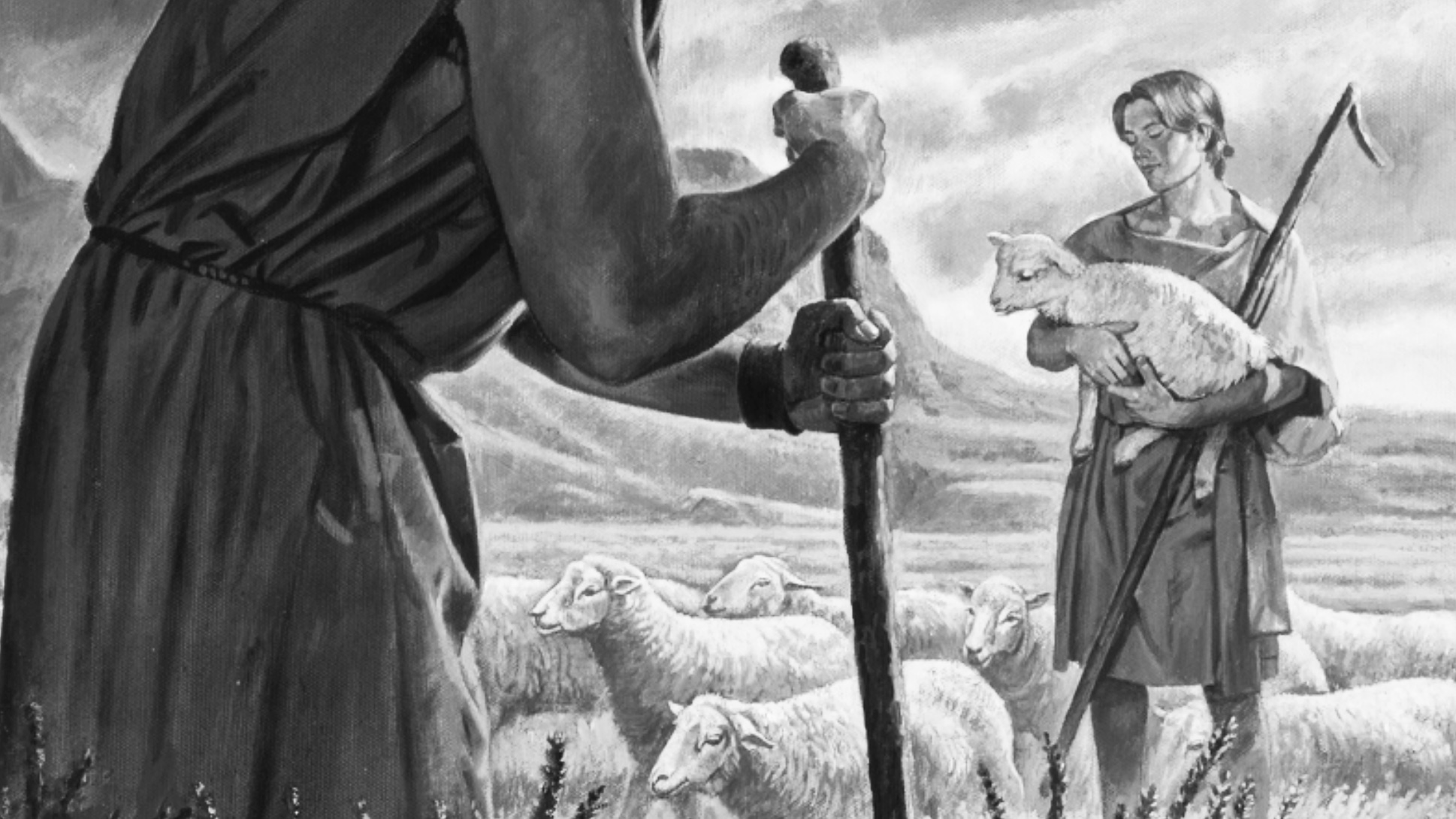

In Genesis 4, two brothers offered a sacrifice to God. One sacrifice was accepted and the other was not. “And in the process of time it came to pass that Cain brought an offering of the fruit of the ground to the Lord. Abel also brought of the firstborn of his flock and of their fat” (see vv. 3-4).
We can infer from the beginning of verse 3 that God had previously given instruction to Adam and Eve that He required a sacrifice from them, and they passed it down to Cain and Abel. But Cain’s offering was rejected. Genesis 4:4 continues, “And the Lord respected Abel and his offering, but He did not respect Cain and his offering.”
Hebrews 11:4 tells us what was going on. “By faith Abel offered to God a more excellent sacrifice than Cain, through which he obtained witness that he was righteous, God testifying of his gifts; and through it he being dead still speaks.”
Abel’s sacrifice was superior to Cain’s because it was a blood sacrifice. He believed by faith that a substitution had to be made—an animal had to die on his behalf. Abel’s sacrifice is a picture of the substitutionary atonement of Jesus Christ.
There’s no mention of the quality of Cain’s offering, but Genesis says Abel “brought the firstborn of his flock and of their fat” (v. 4). Abel brought the very best he had and gave it to God. That’s the pattern of how to give to the Lord that we see throughout the Scripture.
“And Cain was very angry, and his countenance fell. So the Lord said to Cain, ‘Why are you angry? And why has your countenance fallen? If you do well, will you not be accepted? And if you do not do well, sin lies at the door. And its desire is for you, but you should rule over it'” (vv. 5-7).
Cain was showing his heart there. He was a false worshiper because of his own pride and anger. He had the wrong attitude. God never separates the worship from the worshiper. He always looks at the heart. He sees the outward form of worship, whatever it may be—the raising of hands, the singing of songs, the giving of time or treasure—but He focuses on the person’s heart.
Worship begins with the heart. In Matthew, Jesus spoke about those in Jerusalem who worshiped Him in vain: “These people draw near to Me with their mouth, and honor Me with lips, but their heart is far from Me” (Matthew 15:8).
Cain brought his worship, but he left out the blood. And the character behind his worship was lacking. But God didn’t just write Cain off. He approached him, saying, “Hey, why are you so angry?” (see Genesis 4:6).
The problem wasn’t with the outward worship. The problem was in his heart. Cain didn’t have a right to be angry. He could have stopped the anger. Cain was a murderer in his heart long before he was a murderer with his hands.
Nothing has changed. Sin is always crouching at our door. For some of us, it’s crossed the threshold, gone inside the house, and we’ve given it its own room. But, as God told Cain, “You must rule over it” (Genesis 4:7, NIV).
If sin is crouching at the door, close the door. Or if Satan is knocking at the door, just say, “Jesus, would You answer the door for me?” Don’t open the door to say, “I rebuke you, Devil” and carry on a conversation with him—hide behind Jesus.
Satan desires to control you, to rule you, through sin. That’s the battle we face: the flesh versus the spirit.
“But you must rule over it.”