
In June 2016, Canada legalized euthanasia, otherwise known as medical assistance in dying or MAiD, for those whose death was “reasonably foreseeable.” Less than a decade later, doctors are expressing their “grave concerns” over loosening requirements that have resulted in patients requesting—and receiving—euthanasia because they were obese, grieving, or poor.
Despite this obvious slippery slope, other countries are still considering legalizing euthanasia (which is just a more pleasant name for doctors murdering their patients!). A report highlighted one British MPs hope that the “horror stories” coming out of Canada will be enough to stop such a measure in the UK. The stories highlighted include:
- A husband who had to petition courts to stop the euthanizing of his wife who was dealing with mental illness
- Hospitals relying on advance requests to kill patients who can no longer give proper consent because of dementia or related conditions
- Doctors breaking euthanasia laws and the government looking the other way
British MP David Smith wrote in an open letter:
There are already warnings from experianced clinicians that this law will increase the likilyhood of some people with life-limiting medical conditions of diabilites being pressured by unscrupulous family member to end their lives.
Furthermore, whatever medical or legal safeguards are put in place, the reality is that some people — even in loving homes and families— will opt to die early because they feel that they are a burden, whether to their families or to society at large.
We can also see that where assisted suicide / assisted dying (AS/AD) has been introduced elsewhere, the initial legal parameters often expand to include the non-terminal, the young, the disabled, and the vulnerable. In Belgium, euthanasia has been given to an adult suffering from depression. A recent medical report raised concerns that people in Canada are receiving a lethal injection ‘due to suffering associated with a lack of access to medical, disability, and social support.’ Both of these jurisdictions were meant to have safeguards.
An AS/AD law would also subtly shift the role of the NHS and the state from being a protector of life to an enabler of death.
Yes, it’s a very slippery slope because euthanasia—though it masquerades as compassionate care—is, at its heart, a low view of the value of human life. Suddenly what gives our life value is not our innate humanness (being made in God’s image—Genesis 1:27) but, rather, our perceived quality of life, personal autonomy, or, frankly, how financially feasible it is to keep us around (bear in mind Canada has socialized medicine and is currently facing a growing health care crisis).
When life is not seen as a gift from a sovereign God who controls all things but instead as something we have the right and ability to control, abuses take place, and lives are quickly extinguished. Man acts as his own god!
As Christians, we must stand against these life-ending practices—God is the Author of life and the One who says who lives and who dies.
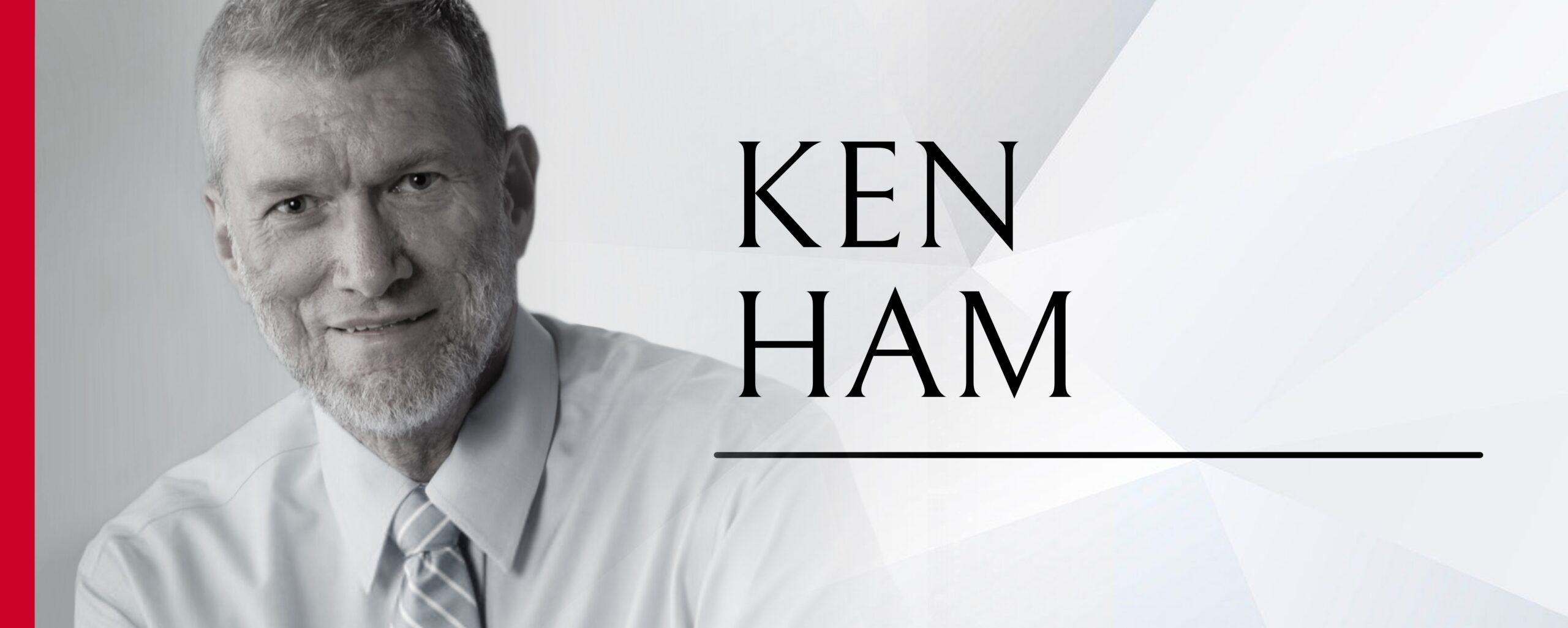
Ken Ham is an author, speaker, and Founder and CEO of Answers in Genesis and its two popular interests: the acclaimed Creation Museum and the internationally known Ark Encounter.
Editor’s Note: ‘The Champions Of Sanctioned Homicide’
Canada’s Medical Assistance in Dying (MAiD) has made it the poster child for euthanasia in the Western World, with masses of citizens signing off every year to be killed through the program.
Since its legalization, assisted suicide has exploded in the country, with an abysmal amount of pushback by the public. Funeral homes have begun offering assisted suicide, 1-in-3 Canadians support euthanasia being provided to people in poverty, and MAiD is now the fifth leading cause of death—the “loss of natural affection” resulting from this program should be plain for all to see (2 Timothy 3:1-5).
Apologetics speaker and author Patricia Engler, in her article, “Darwin, Nazi Germany, And Canada — The Champions Of ‘Sanctioned Homicide,'” wrote:
What do a 27-year-old autistic woman, a 51-year-old woman with chemical sensitivities, and a hearing-impaired 61-year-old man hospitalized for a risk of suicide have in common? All of them were loved. None of them were dying. And all of them were Canadians killed by doctors. From the time when Canada decriminalized “medical assistance in dying” (MAID) in 2016 until the end of 2022, MAID had claimed 44,958 Canadian lives. These numbers represent not mere statistics, but people with stories, families, and souls. As Canadian ethicist Daryl Pullman notes, their deaths “are in point of fact, homicides.”
Both euthanasia and eugenics operate on the premise that certain lives are not worth living. This view accords with Social Darwinism, which presumes humanity should control its own evolution by favoring the lives of the “fit” at the expense of the “unfit.” Accordingly, influential Social Darwinists—including biologist Ernst Haeckel, Unitarian humanist Charles Francis Potter, theosophist Annie Besant, and Planned Parenthood founder Margaret Sanger—fanned flames of support for euthanasia and eugenics.
The most infamous Social Darwinian campaign began in 1933, when the National Socialist German Worker’s Party (the Nazis) enacted laws promoting eugenics, as other nations had done. In the late 1930s, Adolf Hitler called for “extending the rights” of incurably ill patients by allowing “mercy killing.” The Nazis soon launched the “Aktion T-4” involuntary euthanasia program targeting disabled persons. To garner support for Aktion T-4, the Nazis released a film that promoted a “right to die” by telling the story of a physician killing his wife, who sought euthanasia for multiple sclerosis.
Canada’s Parliament passed Bill C-14 enabling euthanasia in 2016. This bill permitted competent adults (age 18 or older) to voluntarily request euthanasia due to a “grievous, irremediable medical condition” characterized by advanced decline, intolerable suffering, and a reasonably foreseeable natural death. But in 2021, an amendment known as Bill C-7 erased the “foreseeable natural death” requirement, offering euthanasia to patients who are not dying.
Bill C-7 also called for extending euthanasia to patients with mental rather than physical illnesses, though this extension has been delayed to 2027. Other voices sought euthanasia for minors, with Quebec’s College of Physicians controversially advocating that parents should be able to euthanize infants with severe deformities and poor prognoses. Relatedly, a survey of 1,000 Canadians indicated that nearly a third of respondents would support euthanasia for homelessness and poverty. In fact, 1 in 5 respondents agreed that euthanasia “should always be allowed, regardless of who requests it.”
Ultimately, a biblical worldview directs individuals and societies toward far healthier approaches to end-of-life practices than do pro-euthaniasia secular arguments. Where a secular view sees humans as isolated machines with the right to self-destruct at will, God’s Word portrays humans as interdependent embodied souls with indelible dignity. Various nations have departed from this high view of life by legislating euthaniasia, with Canada offering an especially sobering case study.
Policymakers and individual Christians must reject the idea of homicide as health care and instead promote strong palliative care, spiritual care, pain control, disability support, and aid for caregivers. These goals will implicitly acknowledge what everyone shares in common: we are all created in God’s image, imbued with priceless value, and entrusted with the gift of life.