The Ninth Circuit Court of Appeals heard oral arguments for a San Diego pastor who was removed from the city police advisory board for his beliefs on gender identity.
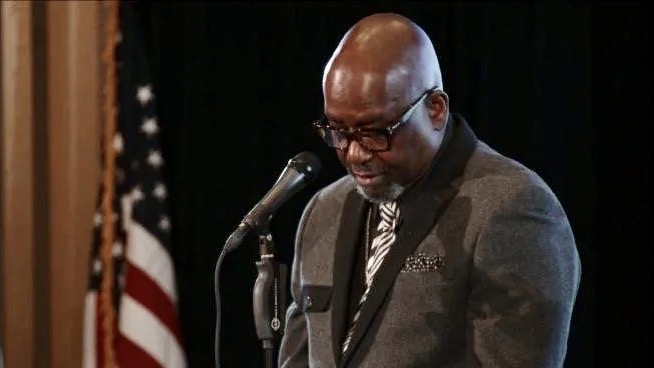
Pastor Dennis Hodges’ beliefs came under fire in 2021 when he abstained from voting on a commission letter that spoke about “ending transphobia” and amplifying the visibility and voices of trans-identifying individuals.
Hodges, pastor of the Church of Yeshua Ha Mashiach in Lemon Grove, California, and a member of the San Diego County Human Relations Commission, explained that the letter contradicted his Christian beliefs on creation and sexuality.
“I love all people. … But to me, it’s an abomination to the eyes of God, so I don’t agree with it,” he said in a statement.
Certain commissioners then pushed Hodges to resign, but after he refused, they held a vote for his removal in 2022. However, the majority favored Hodges.
In August 2023, Mayor Todd Gloria removed Hodges from his voluntary position on the Citizens Advisory Board on Police/Community Relations. He had served on the board since 2017.
Seeking damages and reinstatement to the board, Hodges filed suit against Gloria, claiming he had been religiously discriminated against and that his First Amendment rights had been violated.
The law firm Advocates for Faith and Freedom is defending Hodges, who was a former chaplain for San Diego Police Department and a retired special agent/captain with California Department of Corrections.
Julianne E. Fleischer, legal counsel for Advocates for Faith and Freedom, told Decision that the case centers around “a bedrock constitutional rule: the government cannot impose a religious test to hold public office.”
“While commonality of political purpose may be an appropriate requirement at times for public office, commonality of religious belief is not,” Fleischer explained. “The mayor’s action toward Pastor Hodges crossed that constitutional line. By punishing Pastor Hodges for his religious beliefs, the government imposed exactly the kind of religious test the Constitution prohibits.”
A lower court sided with the mayor, and the Ninth Circuit heard oral arguments on Dec. 3, in which they asked the three judges to reverse the former ruling.
Fleischer said the court responded positively to Hodges’ case.
“We had a very interactive panel of judges who engaged with Pastor Hodges’ legal arguments,” Fleischer said. “Even the government’s attorney effectively conceded the core of our position. When asked whether there were any limits—such as if a mayor might refuse to reappoint someone simply because of disagreement with their religious beliefs—she responded, ‘It would depend on whether there was a nexus between religious tenants and politics.’ In this case, there was no nexus. Pastor Hodges was removed not because of anything he did or how he carried out his duties, but solely because of his Biblical worldview.”