June 21, 2026

June, 21, 2026
June 21, 2026

give

untitled artwork

untitled artwork

World news biblically understood

TRENDING:

What Hope Is There For Dead Churches?

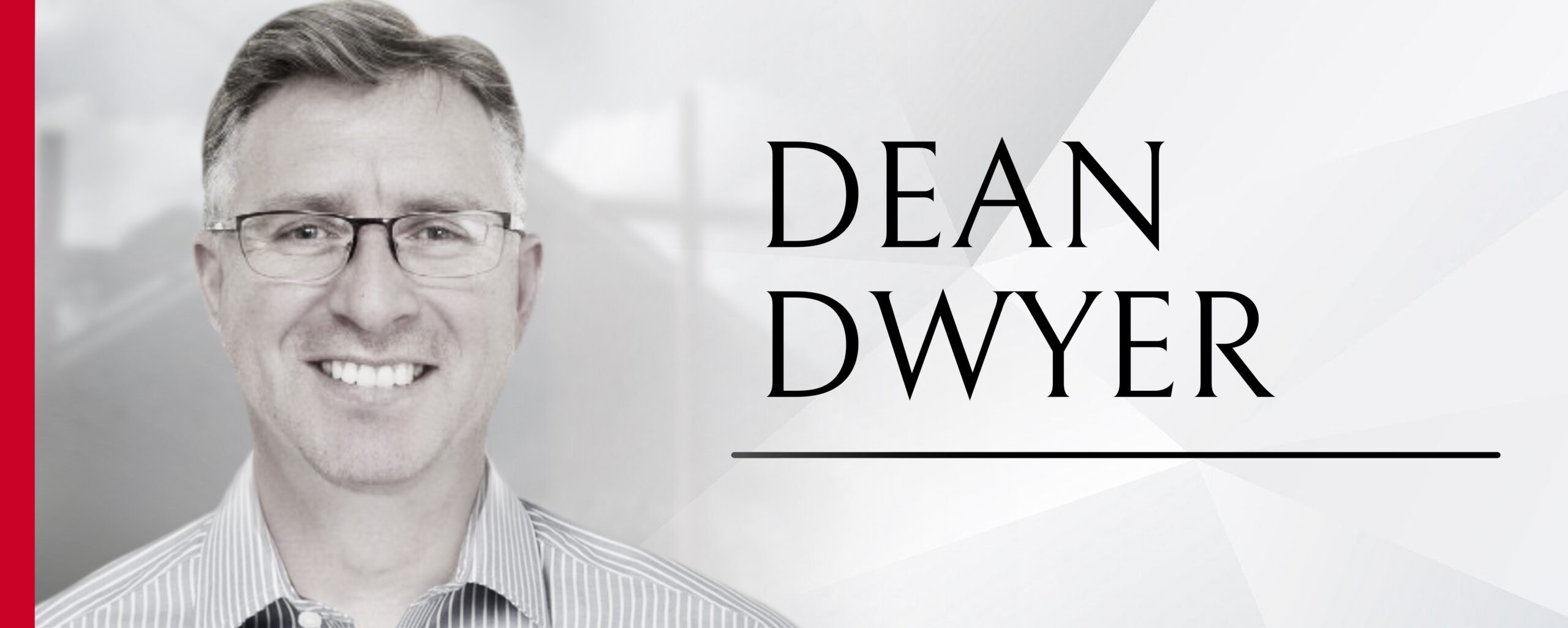
Pastor Dean Dwyer

We are all familiar with the fact that if we want to get from Point A to Point B, we have to travel along a path.  The path, road or highway we choose has enormous implications for how we travel and whether we actually arrive at our destination.

I have always been drawn to Jeremiah 6:16 which reads as follows: “Thus says the LORD: ‘Stand in the ways and see, and ask for the old paths, where the good way is, and walk in it; then you will find rest for your souls.'”

In this passage, God gives four simple instructions – stand, see, ask, walk.  And what would be the end result?  Rest.  In the case of Judah, to whom Jeremiah was speaking, their answer to God’s warning is found at the end of the same verse: “But they said, ‘We will not walk in it.'”  Quite simply, what the people were rejecting was the law of Moses and the walk of faith demonstrated by those before them.  They refused to pay attention to God’s Word, to God’s prophets and they refused to follow the example of faithful men and women of the past.  In so doing, they chose their own path.

As Proverbs 14:12 declares: “There is a way that seems right to a man, but its end is the way of death.  In the case of Judah, this proved to be true.  As a result of their decision, they would receive judgement instead of rest.”

The first two admonitions (stand and see) are very deliberate.  This was a call for the people to engage in thoughtful consideration.  It was as if the Lord was imploring them to pause and reflect. To look not only within but also to look back.  Most importantly, He suggests they also look ahead to what the ultimate consequence will be if they do not heed the warning.  The serious listener would have duly considered two passages from Psalm 119.  Firstly, verse 59: “I thought about my ways, and turned my feet to Your testimonies.”  Secondly, verse 105: “Your word is a lamp to my feet and a light to my path.

To be clear, the “old paths” are not simply activities of antiquity.  God makes it clear through Jeremiah that there are old paths which lead to good ways.  Every old path may not be good, but it would appear from Scripture that the good way is certainly old.  According to Jeremiah, if a weary traveler finds a way which is both old and good, he shall find rest.  As we are all familiar with, the “way” is, of course, Jesus (John 14:6; Hebrews 10:20).  This way is “old” because He is the Lamb slain from the foundation of the world (Revelation 13:8).  The “good” is spoken of in Psalm 34:8: Oh, taste and see that the LORD is good.  And all of this leads to rest as testified by Matthew 11:28:  “Come to Me, all you who labour and are heavy laden, and I will give you rest.

In World War II, during the Battle of the Bulge, there was a group of German soldiers who dressed themselves in the uniforms of the Allies.  These German soldiers used American military vehicles and went through the countryside changing the road signs.  When the American troops came to the various crossroads, they were often fooled and led off in the wrong direction.  This deception by the Germans almost gave them the victory in what was a decisive battle!

Just like those German soldiers caused confusion and death by changing a few signs, so too we see our spiritual enemy using false religion and apostate Christianity to change the signposts which lead back to the Father.  Recently I read an article about Nicki Shearer, digital content creator for Elevation Church, who said that at their Resurrection Sunday service they, “We’re not going to use the words ‘Calvary’, ‘resurrection’ or the phrase ‘the blood of Jesus.’”

In providing a reason for altering the signposts, so to speak, Shearer explained that, “We won’t use language that will immediately make someone feel like an outsider.” 

In response to Shearer’s statement, I would say this: given that you were doing this to make the “unchurched” feel more comfortable, what if that was the last and only opportunity somebody had to hear the true gospel of Jesus Christ?  How can you present the gospel without mentioning Calvary, the precious blood of Jesus or His victorious resurrection?  How would you stand before Jesus and explain that you prioritised the comfort of the hearer over the conviction of their sin?

Blood loss in our own bodies will eventually lead to death.  The fact that many modern churches will not speak about the blood of Jesus are fundamentally undergoing their own “blood loss” and the result will be the same – a dead church. It is what I refer to as a spiritual mannequin – it looks alive, but it is dead.

Revelation 3:1 puts it this way (emphasis added): “And to the angel of the church in Sardis write, ‘These things says He who has the seven Spirits of God and the seven stars: I know your works, that you have a name that you are alive, but you are dead.’”  In fact, that is but one of four categories I ascribe to the church today: the dead, the dying, the divided and the dedicated.

So, in the modern day, what would it look like if the church advocated for the old paths once again?  Let me offer some suggestions.  The old paths were when the name of Christ was exalted, not avoided.  The old paths were when people loved the truth and hated a lie; when they would follow the Word and ignore the world; when they came to church eager to get in, rather than waiting to get out.  The old paths were when we read the Bible in public, prayed in school and preached on footpaths.  The old paths were when the Bible was believed, not corrected.  The old paths were when laws were based on the Bible; families read the Bible and churches taught the Bible.  The old paths were when preachers were more interested in new converts than new cars. 

You see, the great irony of the church at Sardis is found when you read the statement Christ made in Revelation 1:18.  He says, “I am He who lives, and was dead, and behold, I am alive forevermore.”  He was dead but now alive – the church was alive, but is now dead.  But some may say, what hope is there for dead churches?  May I remind you, friend, that we serve a Saviour that is in the business of bringing the dead to life. 


give

The Clash Of Worldviews: Secular Progressivism Vs Biblical Christianity

To understand the age in which we live, it is important to understand the ideas behind secular progressivism and, more importantly, what its aspirations are. After all, whether the majority of people realise it or not, secular progressivism has the stated goal of organising social life (with or without your consent) toward explicitly chosen goals. Those goals, however, put it in direct conflict with Biblical truth. The major flaw in secular progressivism is its belief that preference trumps truth. Because the maxim of this ideology is that “all preferences are created equal,” any belief which competes with somebody’s “preference” is treated in one of two ways. Either it must be suppressed (usually with the backing of government or media institutions), or it must be branded as a private hobby which is acceptable in the home or inner thought life but not welcome in the public square where others may be influenced by it.

How Allegory Reduces The Bible To Nothing More Than A Work Of Fiction

It is God alone who predicts the future. Prophecy is one of God’s signatures that tells us that we can trust in Him and His Word. It is what separates the Bible from all other religious writings in the world. But if we consistently use allegorical hermeneutics, as Charles Ryrie points out, then in effect what we have just done is reduce the Bible to nothing more than a work of fiction. How tragic! With hermeneutics like that, it is no wonder so many people want nothing to do with Bible prophecy. It is no wonder pastors refuse to preach and teach events concerning the future, and it is no wonder it can be so hard to understand.

sign up

Jan Markell: You Can’t Have A Genuine Revival With False Doctrine Raging

I hear a dozen evangelists stating that we are on the verge of a great revival. One self-proclaimed prophet says that a billion souls will come to faith in the coming weeks and months. If my Rapture is imminent, how can there be an imminent revival? Which is it? The Bible does talk about a coming revival. The question concerns its timing. Is it in the coming days, or is it after the Rapture when the “left behind” world realizes they should have listened to believers like you and me, get a second chance, and multitudes come to faith?

ABC's of Salvation

Decision

UTT

FOI

untitled artwork

Israel My Glory

Pastor Dean Dwyer

We are all familiar with the fact that if we want to get from Point A to Point B, we have to travel along a path.  The path, road or highway we choose has enormous implications for how we travel and whether we actually arrive at our destination.

I have always been drawn to Jeremiah 6:16 which reads as follows: “Thus says the LORD: ‘Stand in the ways and see, and ask for the old paths, where the good way is, and walk in it; then you will find rest for your souls.'”

In this passage, God gives four simple instructions – stand, see, ask, walk.  And what would be the end result?  Rest.  In the case of Judah, to whom Jeremiah was speaking, their answer to God’s warning is found at the end of the same verse: “But they said, ‘We will not walk in it.'”  Quite simply, what the people were rejecting was the law of Moses and the walk of faith demonstrated by those before them.  They refused to pay attention to God’s Word, to God’s prophets and they refused to follow the example of faithful men and women of the past.  In so doing, they chose their own path.

As Proverbs 14:12 declares: “There is a way that seems right to a man, but its end is the way of death.  In the case of Judah, this proved to be true.  As a result of their decision, they would receive judgement instead of rest.”

The first two admonitions (stand and see) are very deliberate.  This was a call for the people to engage in thoughtful consideration.  It was as if the Lord was imploring them to pause and reflect. To look not only within but also to look back.  Most importantly, He suggests they also look ahead to what the ultimate consequence will be if they do not heed the warning.  The serious listener would have duly considered two passages from Psalm 119.  Firstly, verse 59: “I thought about my ways, and turned my feet to Your testimonies.”  Secondly, verse 105: “Your word is a lamp to my feet and a light to my path.

To be clear, the “old paths” are not simply activities of antiquity.  God makes it clear through Jeremiah that there are old paths which lead to good ways.  Every old path may not be good, but it would appear from Scripture that the good way is certainly old.  According to Jeremiah, if a weary traveler finds a way which is both old and good, he shall find rest.  As we are all familiar with, the “way” is, of course, Jesus (John 14:6; Hebrews 10:20).  This way is “old” because He is the Lamb slain from the foundation of the world (Revelation 13:8).  The “good” is spoken of in Psalm 34:8: Oh, taste and see that the LORD is good.  And all of this leads to rest as testified by Matthew 11:28:  “Come to Me, all you who labour and are heavy laden, and I will give you rest.

In World War II, during the Battle of the Bulge, there was a group of German soldiers who dressed themselves in the uniforms of the Allies.  These German soldiers used American military vehicles and went through the countryside changing the road signs.  When the American troops came to the various crossroads, they were often fooled and led off in the wrong direction.  This deception by the Germans almost gave them the victory in what was a decisive battle!

Just like those German soldiers caused confusion and death by changing a few signs, so too we see our spiritual enemy using false religion and apostate Christianity to change the signposts which lead back to the Father.  Recently I read an article about Nicki Shearer, digital content creator for Elevation Church, who said that at their Resurrection Sunday service they, “We’re not going to use the words ‘Calvary’, ‘resurrection’ or the phrase ‘the blood of Jesus.’”

In providing a reason for altering the signposts, so to speak, Shearer explained that, “We won’t use language that will immediately make someone feel like an outsider.” 

In response to Shearer’s statement, I would say this: given that you were doing this to make the “unchurched” feel more comfortable, what if that was the last and only opportunity somebody had to hear the true gospel of Jesus Christ?  How can you present the gospel without mentioning Calvary, the precious blood of Jesus or His victorious resurrection?  How would you stand before Jesus and explain that you prioritised the comfort of the hearer over the conviction of their sin?

Blood loss in our own bodies will eventually lead to death.  The fact that many modern churches will not speak about the blood of Jesus are fundamentally undergoing their own “blood loss” and the result will be the same – a dead church. It is what I refer to as a spiritual mannequin – it looks alive, but it is dead.

Revelation 3:1 puts it this way (emphasis added): “And to the angel of the church in Sardis write, ‘These things says He who has the seven Spirits of God and the seven stars: I know your works, that you have a name that you are alive, but you are dead.’”  In fact, that is but one of four categories I ascribe to the church today: the dead, the dying, the divided and the dedicated.

So, in the modern day, what would it look like if the church advocated for the old paths once again?  Let me offer some suggestions.  The old paths were when the name of Christ was exalted, not avoided.  The old paths were when people loved the truth and hated a lie; when they would follow the Word and ignore the world; when they came to church eager to get in, rather than waiting to get out.  The old paths were when we read the Bible in public, prayed in school and preached on footpaths.  The old paths were when the Bible was believed, not corrected.  The old paths were when laws were based on the Bible; families read the Bible and churches taught the Bible.  The old paths were when preachers were more interested in new converts than new cars. 

You see, the great irony of the church at Sardis is found when you read the statement Christ made in Revelation 1:18.  He says, “I am He who lives, and was dead, and behold, I am alive forevermore.”  He was dead but now alive – the church was alive, but is now dead.  But some may say, what hope is there for dead churches?  May I remind you, friend, that we serve a Saviour that is in the business of bringing the dead to life. 


Trusted Analysis From A Biblical Worldview

Help reach the lost and equip the church with the living and active truth of God's Word in our world today.

YOU CARE ABOUT

BIBLICAL TRUTH. SO DO WE.


Together, We Can Deliver A Biblical Understanding

Of News Events Around The World.

The Clash Of Worldviews: Secular Progressivism Vs Biblical Christianity

To understand the age in which we live, it is important to understand the ideas behind secular progressivism and, more importantly, what its aspirations are. After all, whether the majority of people realise it or not, secular progressivism has the stated goal of organising social life (with or without your consent) toward explicitly chosen goals. Those goals, however, put it in direct conflict with Biblical truth. The major flaw in secular progressivism is its belief that preference trumps truth. Because the maxim of this ideology is that “all preferences are created equal,” any belief which competes with somebody’s “preference” is treated in one of two ways. Either it must be suppressed (usually with the backing of government or media institutions), or it must be branded as a private hobby which is acceptable in the home or inner thought life but not welcome in the public square where others may be influenced by it.

How Allegory Reduces The Bible To Nothing More Than A Work Of Fiction

It is God alone who predicts the future. Prophecy is one of God’s signatures that tells us that we can trust in Him and His Word. It is what separates the Bible from all other religious writings in the world. But if we consistently use allegorical hermeneutics, as Charles Ryrie points out, then in effect what we have just done is reduce the Bible to nothing more than a work of fiction. How tragic! With hermeneutics like that, it is no wonder so many people want nothing to do with Bible prophecy. It is no wonder pastors refuse to preach and teach events concerning the future, and it is no wonder it can be so hard to understand.

untitled artwork 6391

Jan Markell: You Can’t Have A Genuine Revival With False Doctrine Raging

I hear a dozen evangelists stating that we are on the verge of a great revival. One self-proclaimed prophet says that a billion souls will come to faith in the coming weeks and months. If my Rapture is imminent, how can there be an imminent revival? Which is it? The Bible does talk about a coming revival. The question concerns its timing. Is it in the coming days, or is it after the Rapture when the “left behind” world realizes they should have listened to believers like you and me, get a second chance, and multitudes come to faith?

ABC's of Salvation

TV AD

worldview matters

Decision Magazine V AD

Decision

Jan Markell

Israel My Glory

Erick Stakelbeck

untitled artwork

YOU CARE ABOUT

BIBLICAL TRUTH.

SO DO WE.

Together, We Can Deliver A Biblical Understanding Of News Events Around The World And Equip The Church To Stand With A Biblical Worldview.

untitled artwork

Israel My Glory

YOU CARE ABOUT

BIBLICAL TRUTH.

SO DO WE.


Together, We Can Deliver A Biblical Understanding Of News Events Around The World And Equip The Church To Stand With A Biblical Worldview.