
It is heartbreaking to witness the bloodshed in Iran as the regime kills its own people en masse for protesting the country’s leadership. Even with an internet blackout—meant to keep the world from seeing what is happening—videos have surfaced showing hospitals overwhelmed with body bags lining the floors.
While the death toll reports vary, one thing we know for sure is that the numbers are staggering. Time magazine reported:
As many as 30,000 people could have been killed in the streets of Iran on Jan. 8 and 9 alone, two senior officials of the country’s Ministry of Health told TIME—indicating a dramatic surge in the death toll. So many people were slaughtered by Iranian security services on that Thursday and Friday, it overwhelmed the state’s capacity to dispose of the dead. Stocks of body bags were exhausted, the officials said, and eighteen-wheel semi-trailers replaced ambulances.
The Health Ministry’s two-day figure roughly aligns with a count gathered by physicians and first responders, and also shared with TIME. That surreptitious tally of deaths recorded by hospitals stood at 30,304 as of Friday, according to Dr. Amir Parasta, a German-Iranian eye surgeon who prepared a report of the data. Parasta said that number does not reflect protest-related deaths of people registered at military hospitals, whose bodies were taken directly to morgues, or that happened in locales the inquiry did not reach. Iran’s National Security Council has said protests took place in around 4,000 locations across the country.
“We are getting closer to reality,” Dr. Parasta said. “But I guess the real figures are still way higher.”
The only parallel offered by online databases occurred in the Holocaust. On the outskirts of Kyiv on Sept. 29 and 30, 1941, Nazi death squads executed 33,000 Ukrainian Jews by gunshot in a ravine known as Babyn Yar.
In Iran, the killing fields extended across the country where, since Dec. 28, hundreds of thousands of citizens had assembled in the streets chanting first, for relief from an economy in freefall, and soon for the downfall of the Islamic regime. During the first week, security forces confronted some demonstrations, using mostly non-lethal force, but with officials also offering conciliatory language, the regime response was uncertain. That changed during the weekend commencing Jan. 8. Protests peaked, as opposition groups, including Reza Pahlavi, the exiled son of Iran’s former shah, urged people to join the throngs…
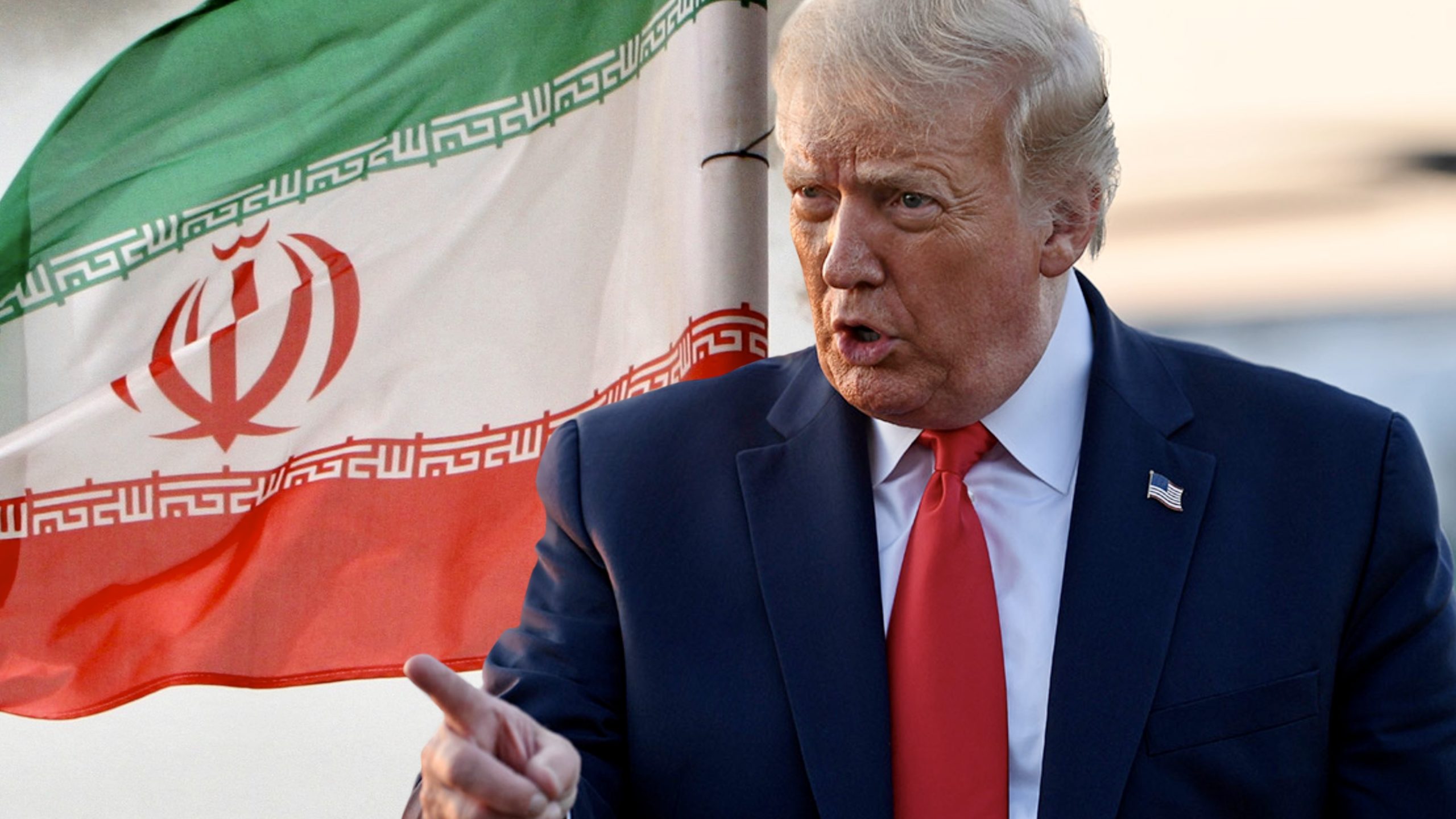
Time concluded by stating that “U.S. President Donald Trump repeated vows to protect [the protesters], though no help arrived.” I would correct that statement by clarifying that the president has not yet intervened.
Israeli analysts have pointed out a pattern in President Trump: First, a threat is given, followed by a buildup, and then a strike. We saw that last year in Iran when the United States attacked Iran’s nuclear sites. This massive military strike occurred after many warnings. Just recently in Venezuela, we saw the Trump administration take action with the capture of Marxist leader, Nicolas Maduro.
So far, Trump means what he says, and says what he means.
Trump’s threat to Iran included a “red line” for the Iranian regime, demanding that they not kill their own civilian protesters. The regime, of course, didn’t heed that warning. Therefore, following his continued pattern, the next stage was a buildup of US military assets in the region.
Is a strike imminent? I can assure you that President Trump is weighing every option. If Trump does nothing, he risks appearing weak. If he orders a strike that fails or triggers deadly retaliation, it could become a lasting stain on his presidency and likely carry serious consequences into the midterms. On the other hand, if these strikes succeed and help pave the way for the regime’s collapse, it could be remembered as one of the most significant achievements by a US president.
The stakes are high. Time will tell what the outcome will be. This is indeed a critical situation that we need to keep in prayer—for the deliverance and freedom of the Iranian people and for the defeat of the Iranian regime, the leading state sponsor of terror in the Middle East.
We also need to be in prayer for President Trump, as well as the bravery and protection of the US military if they are engaged in an attack.
And, of course, we must pray for Israel. It is possible that they will join the United States in the event of an attack. Either way, Israel will no doubt be caught up once again in the crosshairs of Iran’s ballistic missiles.
What does the God of this universe have to say?
In Genesis 12:3, God presents a warning to the whole world that He will “bless those who bless” Israel and “curse those who curse” them. Those were also the very words God put into Balaam’s mouth in Numbers 24:9.
The Iranian regime is on a collision course with the God of Israel. They have squandered countless billions of dollars, not to benefit their own people, but to set up their proxies around Israel with one intent: to destroy her. And yet, they have continuously failed! Hezbollah has failed. Hamas has failed. The proxies in Syria and Iraq have failed. There’s not much left of the Houthis in Yemen either.
God sees everything. Nothing catches Him by surprise. In Psalm 121:4, we read: “Behold, He who keeps Israel shall neither slumber nor sleep.” The truth is that the Iranian regime can scheme, create chaos, and try to destroy Israel all they want. God says they will fail because He is the one who protects His chosen people. Yes, God may use other nations to defend Israel, but ultimately it is God who keeps Israel.
This conflict grieves the heart of God. He has a better plan for mankind. If only people would turn to Him.
If you’re reading this today, know that God loves you, and He wants to save you from your sin and, one day, give eternal life with Him. Why not cry out to Him today? One of the most well-known verses in the entire Bible captures the very heart of God. It is found in John 3:16: “For God so loved the world that He gave His only begotten Son, that whoever believes in Him should not perish but have everlasting life.”