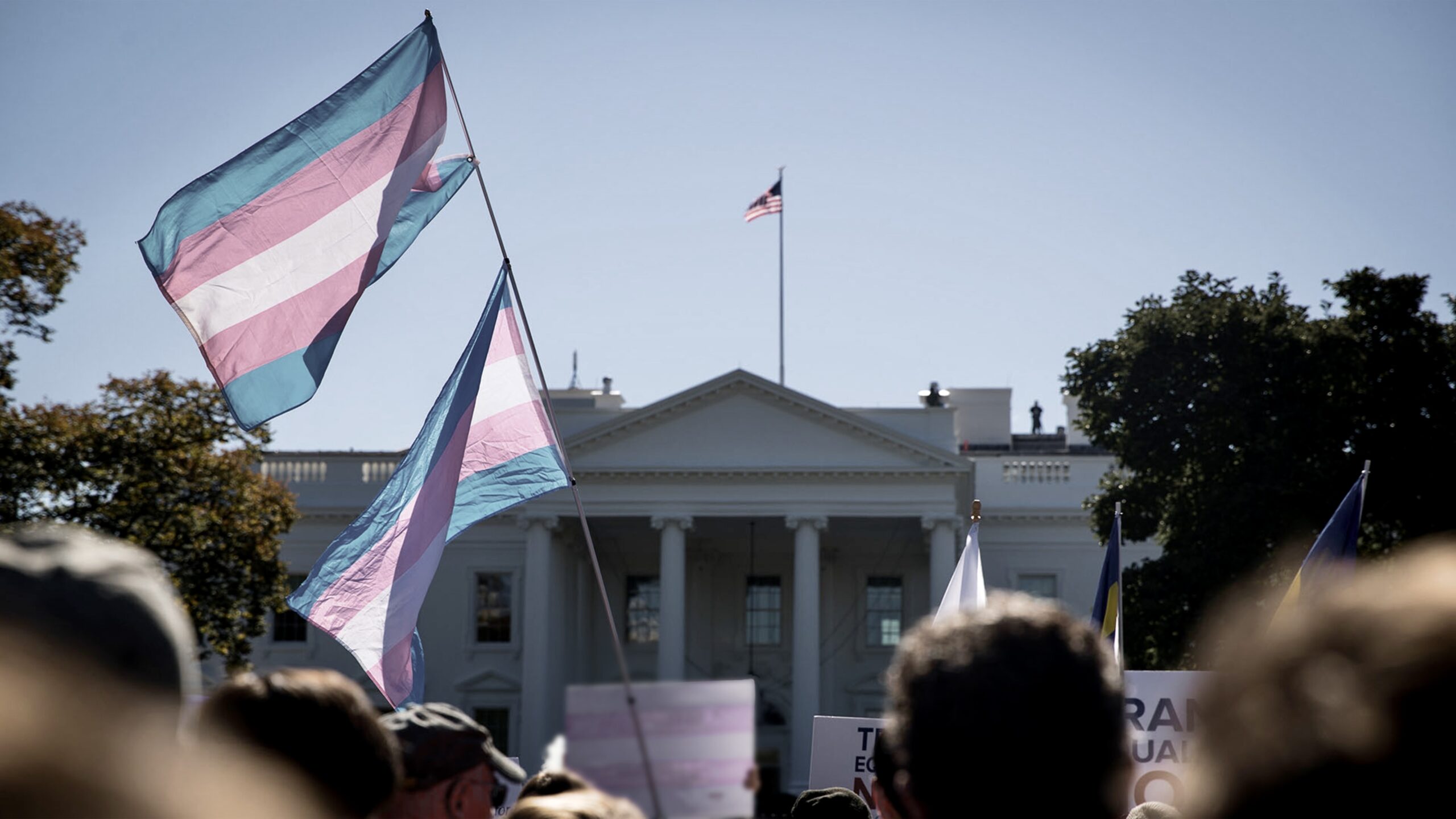
A new report reveals a sharp decline in Gen Z identifying by terms such as “nonbinary,” “bisexual,” “transgender” and “queer” over a recent two-year span while the percentage of Gen Z describing themselves as heterosexual has increased.
Centre for Heterodox Social Science released the “The Decline of Trans and Queer Identity among Young Americans,” a report by Eric Kaufmann that analyzes surveys of undergraduate students on college campuses.
One primary data source for the report was the Foundation for Individual Rights and Expression’s (FIRE) 2025 poll of collegians, which revealed that students identifying as a gender besides male and female effectively reduced by half since 2023. The number decreased from 6.8% in 2022 and 2023 to 3.6% in the most recent survey. In many elite colleges, numbers have declined, including at Andover Phillips Academy in Boston. About 9% identified as a gender besides male and female in 2023, shifting to 3% in 2025 data. At Brown University, students who identified as non-binary were 5% 2022 and 2023. The number decreased to 2.6% in 2025.
Bisexual, queer and other sexual identities rose from 7% in 2020 to 17% in 2023. Over 80% identified as heterosexual in 2020 but decreased to 63.5% in 2023. However, the percentage of those who identify as heterosexual has now increased to 77%.
Transgenderism has shown a decrease as well. Trans-identifying students were less common among the underclassmen, and the freshman class entering university in 2025 was less likely to identify as bisexual, transgender or queer (BTQ+) than the 2025 graduating class.
“To the extent that the youngest represent the leading edge of new trends,” the report states, “this suggests that trans, bisexual and queer identities are declining in popularity with each new cohort.”
The report explores the potential influence of woke beliefs, politics, social media and mental health on the rise and decline of such identities.
Albert Mohler, president of The Southern Baptist Theological Seminary, responded to Kaufman’s statement that the study’s data shows “a sign that fashions are changing” in an episode on his podcast The Briefing.
“Clearly it is, at least in some cases, a fashion,” Mohler said. “It is popular. You’re unpopular. You want to be popular in a peer group. Well, adopt an LGBTQ identity. And then all of a sudden, you’re a protected class.”
Mohler brings in an argument some LGBTQ advocates have formerly rejected but are now using themselves—that cultural whims, not biology, are driving much of how people identity.
“And when we are now talking about LGBTQ, particularly BTQ,” he said, “isn’t it interesting that even some people on the left say at least a part of this, a major function of this, one big driver of this, is fashion. And that’s an incredible statement. … If you can use the word ‘fashion’ and you can talk of it in terms of popularity and you can look at a pattern like social contagion, then you really blow the bottom out of your own boat claiming that something fundamentally biological is going on here.”